
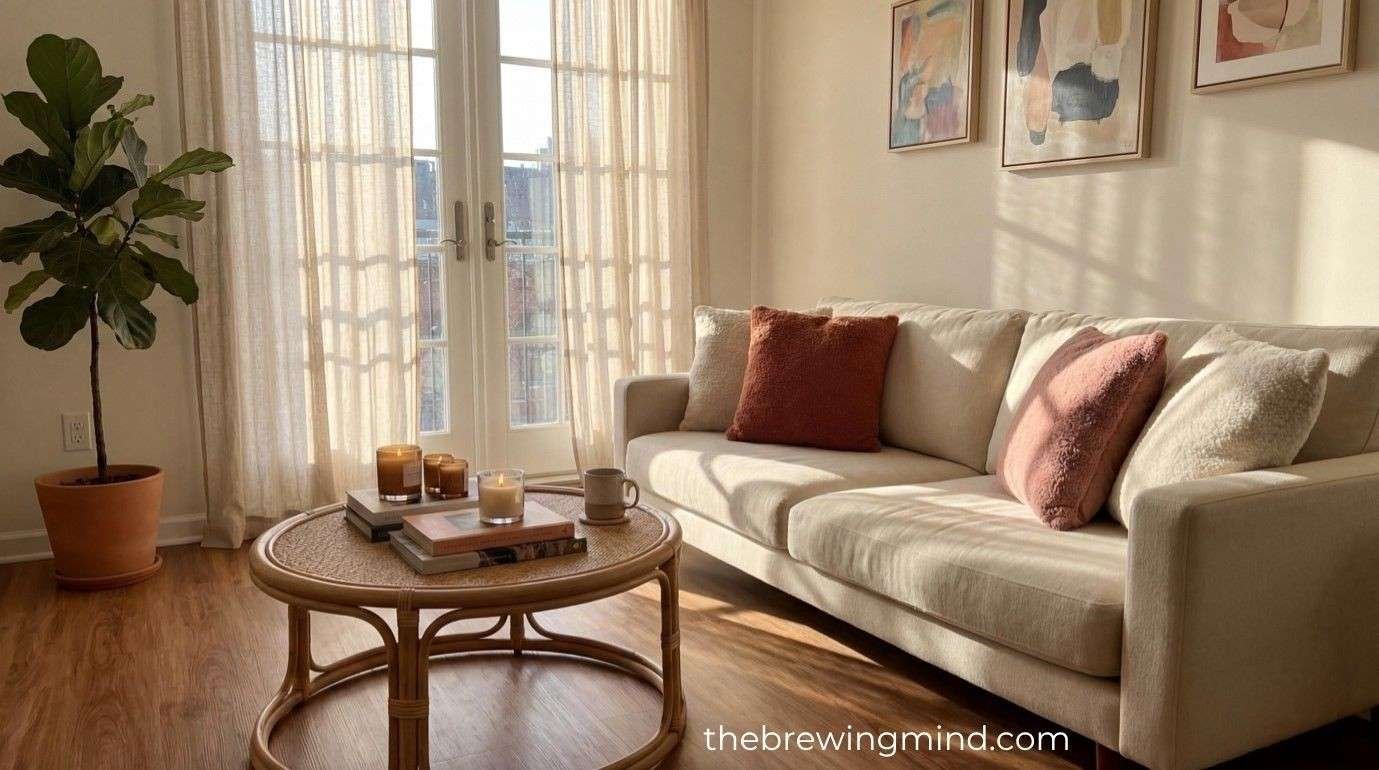
Walk into a cramped living room and something feels off — before you even register the square footage. Your brain reads ceiling height, shadow depth, gaps between furniture, and delivers its verdict in milliseconds: small.
But here’s what designers have always known: perceived size has very little to do with actual dimensions.
Lighting, colour value, and visual weight on the floor plane can make a space feel dramatically larger or smaller than it is.
The 18 tricks we share below will not make you change your floor plan — they change what your senses report about it.
Light, Space & Structure
TRICK-1
Embrace Light, Warm Neutrals
Light shades like soft whites, warm ivories, dusty creams — reflect light and expand perceived volume. If you want dark colour, reserve it for one accent wall only; all four dark walls will compress a room fast.
PRO TIP → MATCH CEILING COLOUR TO WALLS FOR SEAMLESS HEIGHT
TRICK-2
Place Mirrors to Borrow Depth
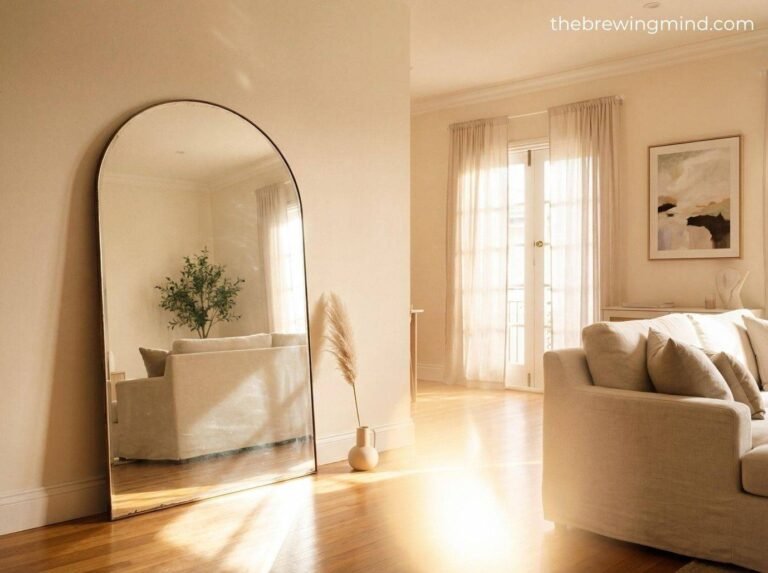
A large mirror opposite a window creates the illusion of a second room. Lean a full-length mirror against a wall or hang it as a wide horizontal one to elongate perceived width. Never reflect cluttered areas.
PRO TIP → ARCHED OR ANTIQUED MIRRORS ADD CHARACTER WITHOUT LOOKING CLINICAL
TRICK-3
Go Vertical with Storage
Wall space is free real estate. Tall shelves and wall-mounted cabinets draw the eye upward, making ceilings feel higher. Fill storage close to (but not past) the ceiling line, and leave the top shelf for styling with arts and more.
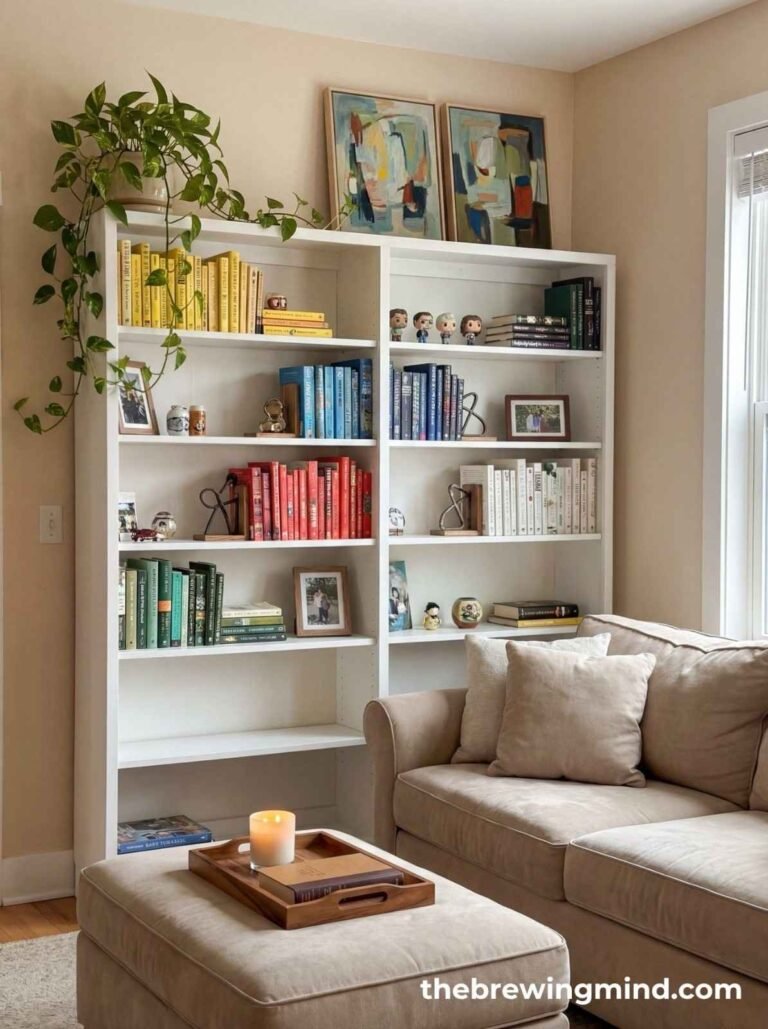
PRO TIP → PAINT SHELVES THE SAME COLOUR AS WALLS SO THEY RECEDE VISUALLY
TRICK-4
Fewer Pieces— Edit Ruthlessly
Too much furniture is the fastest way to shrink a room. A small sofa, one accent chair, and a single coffee table will always feel more spacious than a three-piece sofa set jammed between four walls. Aim for at least 90 cm of walking clearance between your furniture pieces.
PRO TIP → IF YOU’RE UNSURE, REMOVE IT — YOU CAN ALWAYS BRING IT BACK
TRICK-5
Choose Furniture with Exposed Legs
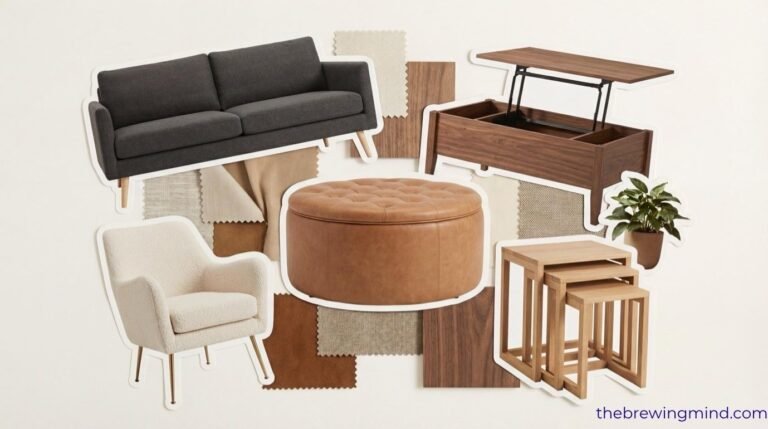
Sofas and chairs on slender legs let the light and sightlines pass beneath them. The floor appears to continue under the furniture — one of the highest-impact single swaps a designer makes in tight spaces.
PRO TIP → LIGHT WOOD OR BRASS LEGS KEEP THE LOOK WARM, NOT CLINICAL
TRICK-6
Invest in Multifunctional Furniture
Every piece should earn its place twice. An ottoman with storage, a convertible coffee table, nesting side tables — these reduce the total number of pieces needed and free up precious floor space.
PRO TIP → CHOOSE ONE HERO MULTIFUNCTIONAL PIECE RATHER THAN MANY MEDIOCRE ONES
Flow, Light & Visual Calm
TRICK-7
Hang Curtains at Ceiling Height
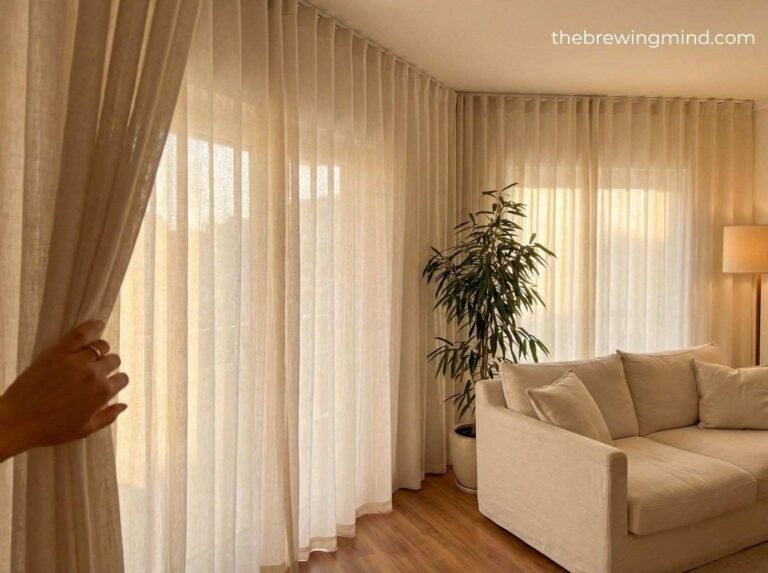
Mount your curtain rod just below the ceiling and let fabric fall to the floor. This vertical sweep adds a perceived 30–40 cm of room height. Use sheer or linen fabrics in soft neutrals so light still enters freely.
PRO TIP → EXTEND CURTAINS WIDER THAN THE WINDOW TO MAKE IT APPEAR LARGER
TRICK-8
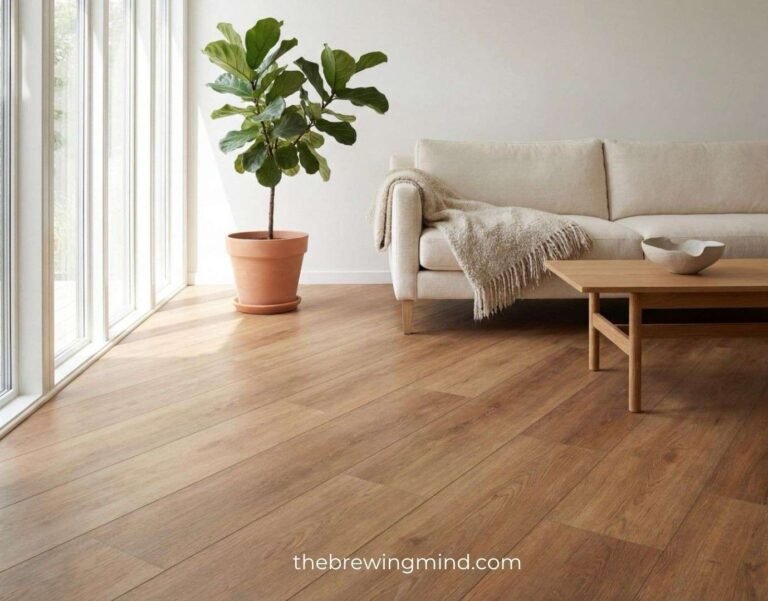
Use Consistent, Unbroken Flooring
Changing floor materials between zones creates visual stops that chop up the space. A single continuous material like wood-toned vinyl or stone-effect tile — lets the eye travel uninterrupted, making the room feel open and expensive.
PRO TIP → LAY PLANKS DIAGONALLY TO MAKE FLOORS APPEAR LONGER
TRICK-9
Remove Visual Clutter
Clutter cognitively taxes everyone who enters, creating a sense of compression. Clear every surface, keep only what is intentional. Editing is the most powerful — and free — decorating tool available to you.
PRO TIP → MAXIMUM THREE ITEMS PER STYLED SURFACE
TRICK-10
Layer Your Lighting
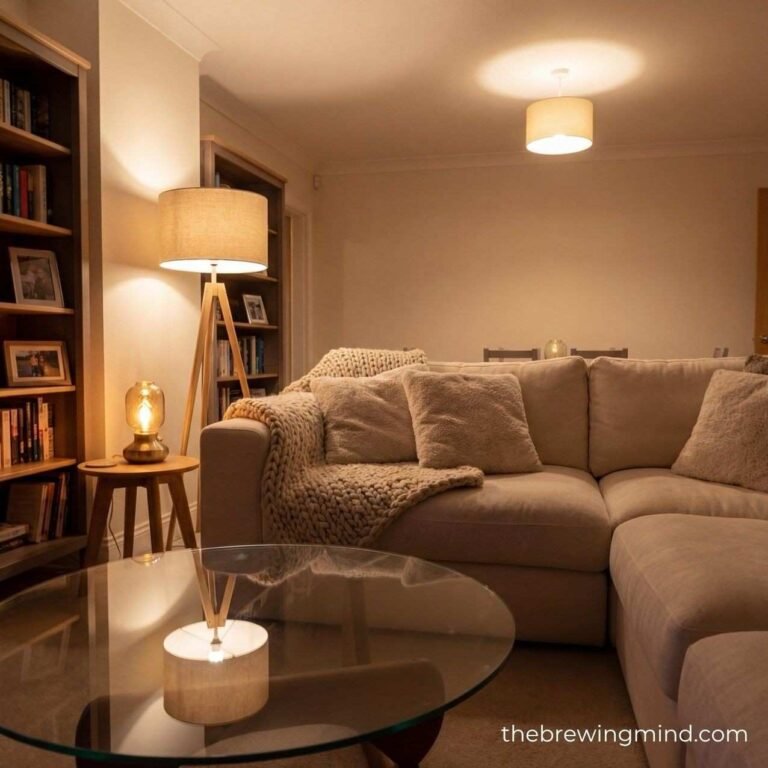
One overhead bulb flattens a room. Replace it with three layers: ambient (ceiling), task (floor lamp), and accent (table lamps or shelf strips). Warm pools of light make a room feel far larger than a single source ever could.
PRO TIP → USE WARM WHITE BULBS (2700–3000K) FOR INSTANT LUXURY
TRICK-11
Use a Glass Coffee Table
A solid table is a visual block at the centre of your room. Swap it for a glass or acrylic top and the floor plane becomes visible beneath it — the eye travels uninterrupted, reading the room as larger.
PRO TIP → A ROUND GLASS TABLE SOFTENS TIGHT SEATING ARRANGEMENTS
TRICK-12
Size Up Your Rug
A too-small rug creates a postage-stamp effect that fragments the room. Choose one large enough for the front legs of all seating to rest on it — this anchors the zone and makes the whole room feel intentional and bigger.
PRO TIP → LIGHT-TONED, LOW-PILE RUGS VISUALLY EXPAND FLOOR SPACE
Texture, Personality & the Finishing Layer
TRICK-13
Use Cushions & Throws to Define the Palette
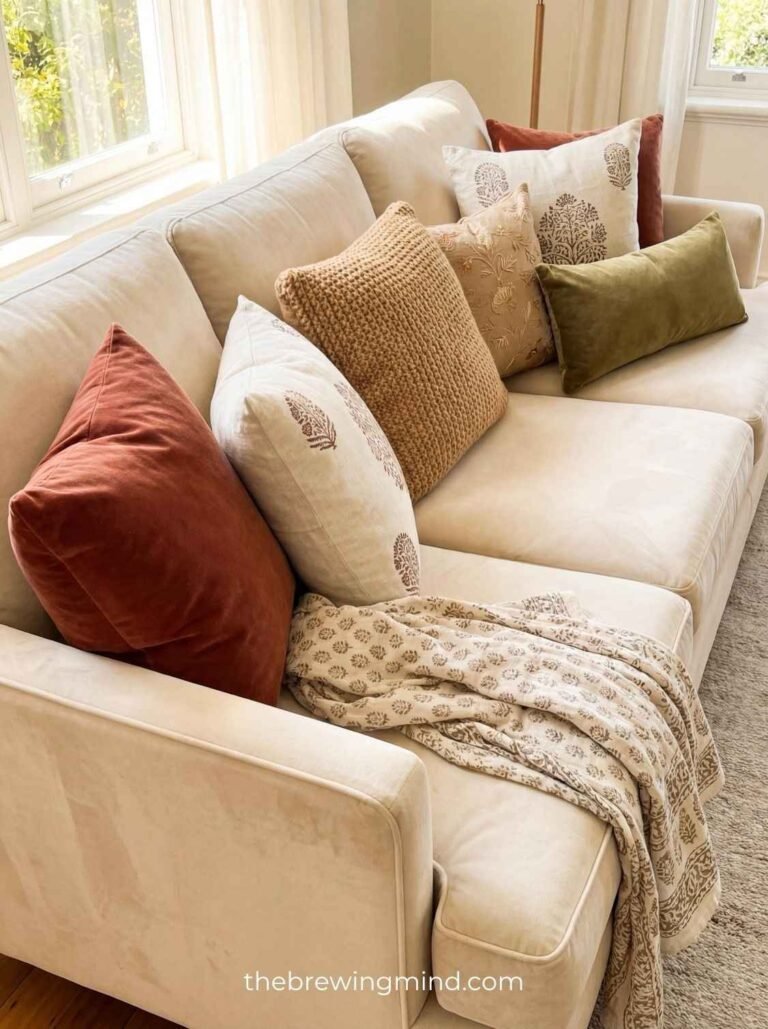
Cushions and throws are the fastest way to reflect personality without permanent commitment. Limit yourself to two or three colours and let texture do the work — velvet against linen, knit against cotton.
PRO TIP → ODD NUMBERS (3 OR 5 CUSHIONS) ALWAYS LOOK MORE COMPOSED
TRICK-14
Create One Statement Wall
Pick one wall and make it count — a bold paint colour, large-format wallpaper, or an oversized artwork. This visual anchor tells the eye where to look, so it doesn’t scan frantically and expose the room’s dimensions.
PRO TIP → THE WALL BEHIND YOUR SOFA IS THE NATURAL STATEMENT WALL
TRICK-15
Add Plants — Especially Tall Ones
A tall floor plant (fiddle-leaf fig, bird of paradise) draws the eye upward and reinforces ceiling height. Trailing plants on shelves add life at multiple levels. Greenery also reduces perceived stress, making rooms feel calmer and more open.
PRO TIP → A CORNER PLANTER FILLS DEAD SPACE WITHOUT BLOCKING SIGHTLINES
TRICK-16
Style Open Shelves Like a Curated Display
When you do use open shelving, treat it like a gallery — three or four intentional objects maximum per shelf. Negative space is part of the design, not wasted space. Group by colour family for an effortlessly cohesive result.
PRO TIP → ONE SMALL PLANT, ONE STACK OF BOOKS, ONE SCULPTURAL PIECE PER SHELF
TRICK-17
Prioritise Hidden Storage
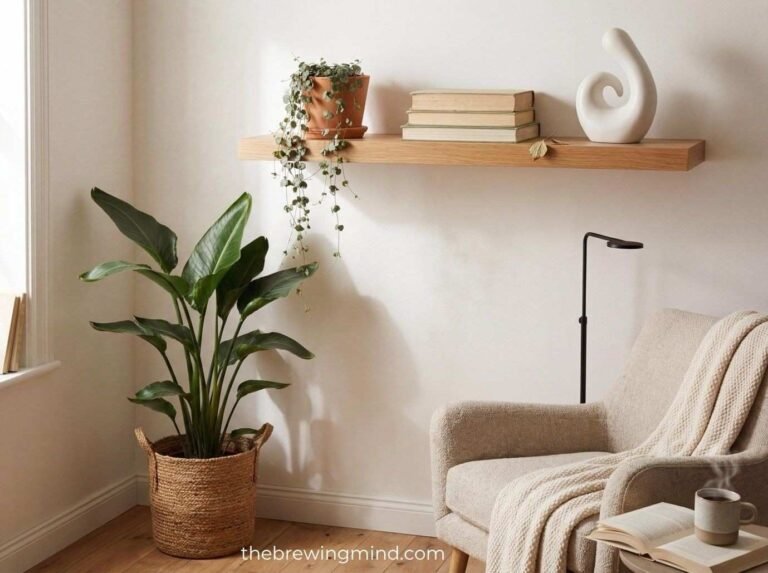
Visible clutter signals fullness. Ottomans with lids, console tables with drawers, closed media units makes the room feels instantly lighter and more considered. In small rooms, concealment is a luxury strategy.
PRO TIP → LABEL STORAGE INTERNALLY SO PUTTING THINGS AWAY STAYS FRICTIONLESS
TRICK-18
Scale Your Art Bigger Than You Think
Small art on large walls makes rooms shrink. A single large-format piece — or a tight gallery wall treated as one unit — reads as confident and luxurious. Hang it in a way that the bottom of the artwork sits 145–150 cm from the floor, at standing eye level.
PRO TIP → BLACK FRAMES ON LIGHT WALLS ALWAYS READ AS HIGH-DESIGN
5 Tricks That Cost $0 — Start Today
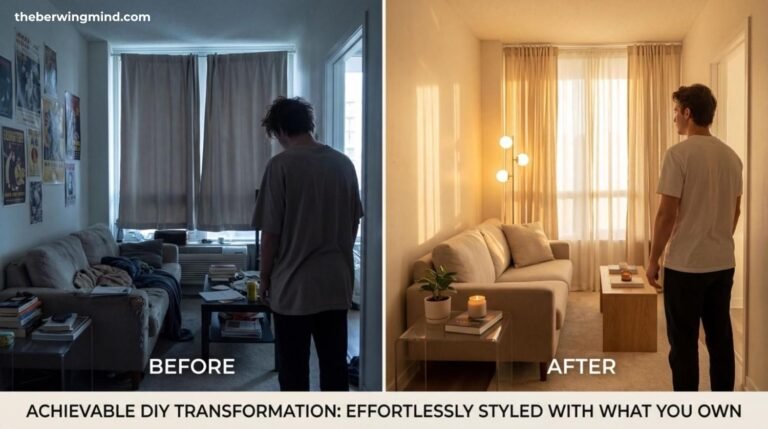
IMMEDIATE IMPACT · NO BUDGET NEEDED
Before you shop for anything, try these five zero-cost changes. You may find the room you wanted was already there.
- Declutter every surface. Put only three items maximum per surface. The difference will shock you.
- Rearrange your furniture. Pull sofas 30–45 cm away from walls and angle toward the focal point — floating furniture makes rooms feel larger, not smaller.
- Re-hang your curtains higher. Move the rod to just below the ceiling line using your existing hardware. The most dramatic free upgrade available.
- Remove one piece of furniture. Take out the piece that contributes least and notice how much lighter the room breathes.
- Change your lightbulbs. Warm white (2700K) transforms the emotional register of any room from clinical to cosy.
If you are also thinking how to style your door then do check out style ways to decorate your home doors.
Frequently Asked Questions
Q1. What’s the single best thing I can do right now?
Declutter every visible surface. It costs nothing, it takes under an hour, and delivers more visual impact than almost any purchase. A sparse room always reads larger — regardless of dimensions.
Q2. Can I use dark colours in a small room?
Yes, wisely. One dark accent wall adds depth without compressing the room — provided the other three walls stay light. Avoid painting all four walls dark.
Q3. What rug works best in a small living room?
Go larger than instinct says. Light to mid-tone, low-pile, neutral. Avoid small, dark, or heavily patterned rugs — all three fragment the space.
Q4. How many cushions on a two-seater sofa?
Three or five — always odd. Mix one larger cushion with smaller ones and vary textures within your palette.
